 ultimate-guide
Personalized Meal Planning for Weight Loss: 2026 Guide
Table of Contents
- Why Personalized Meal Planning for Weight Loss Beats Generic Diets
- How to Build a Personalized Meal Plan: A Transparent 6-Step Method
- Weight-Loss Meal Plan Examples You Can Copy
- Meal Prep for Weight Loss: A Weekly Routine That Sticks
- Choosing a Meal Planning App for Weight Loss
- Personalized Nutrition Coaching: What It Adds and When to Seek It
- Tracking Progress, Budgeting, and Adapting After Weight Loss
- Frequently Asked Questions
Last Updated: October 15, 2026
Why Personalized Meal Planning for Weight Loss Beats Generic Diets
Generic diets fail because they ignore the person following them. A personalized meal planning for weight loss approach builds the plan around your calorie needs, food preferences, schedule, and medical history.
The evidence supports customization over one-size-fits-all rules. The Dietary Guidelines for Americans emphasize eating patterns tailored to individual needs, not rigid universal menus. Meanwhile, CDC guidance on healthy weight frames weight management as a long-term, gradual process rather than a short sprint.
Adherence drives results: a plan you can follow beats a "perfect" plan you abandon in two weeks.
Most generic diet guides hand you a menu and hope you comply. We start with you, then build the menu.
How to Build a Personalized Meal Plan: A Transparent 6-Step Method
Building a custom meal plan takes about an hour of setup, then a short weekly review. The six steps below cover goal setting, food preferences, meal structure, nutrition quality, and lifestyle fit.
Step 1: Set Your Weight-Loss Goal and Daily Calorie Target
Start with a realistic goal and a calorie target you can sustain. A common approach is aiming for gradual loss, roughly one to two pounds per week, which the CDC's healthy weight guidance describes as a reasonable pace. Estimate your maintenance calories using your activity level, then subtract a moderate deficit. Avoid aggressive cuts; they tend to backfire through hunger and fatigue.
Step 2: Map Your Food Preferences, Dietary Needs, and Schedule
List what you actually enjoy eating, then flag food allergies, medical conditions, and cultural or religious preferences. Map your week: which days you cook, grab food on the go, or work late. A custom meal plan that ignores your schedule is one you will not follow.
Step 3: Build Meals Around Protein, Fiber, and Produce
Anchor each meal with protein, fiber, and vegetables. Protein supports satiety, fiber slows digestion, and produce adds volume for relatively few calories. Whole grains, fruit, and vegetables should fill most of your plate, with protein at each meal. This structure keeps portions satisfying without constant calorie counting.
| Step | What You Decide | Time Needed | Review Frequency |
|---|---|---|---|
| 1. Goal and calories | Target rate, daily calorie goal | 15 minutes | Monthly |
| 2. Preferences and schedule | Foods, dietary needs, cooking days | 20 minutes | Seasonally |
| 3. Meal structure | Protein, fiber, produce per meal | 10 minutes | Weekly |
| 4. Meal frequency | Meals and snacks per day | 5 minutes | As needed |
| 5. Nutrition quality | Balanced eating priorities | 10 minutes | Monthly |
| 6. Lifestyle fit | Prep days, backup options | 15 minutes | Weekly |
Weight-Loss Meal Plan Examples You Can Copy
Two sample days show how the same structure scales to different calorie goals. Use them as templates, not rules: swap foods you dislike and adjust portions to your target.
Sample Day 1: A 1,600-Calorie Plan
Breakfast: Greek yogurt with berries and a spoon of oats. Lunch: grilled chicken salad with olive oil dressing and a whole-grain roll. Snack: apple with a small handful of almonds. Dinner: baked salmon, roasted vegetables, and a measured serving of brown rice. Protein and fiber keep hunger manageable at a lower calorie intake.
Sample Day 2: A 2,000-Calorie Plan
Breakfast: two eggs, whole-grain toast, and fruit. Lunch: turkey and vegetable wrap with carrots. Snack: cottage cheese with pineapple. Dinner: lean beef stir-fry over rice with mixed vegetables. Add a second snack if training volume is high, the extra calories come from larger portions, not different food rules.
Meal Prep for Weight Loss: A Weekly Routine That Sticks
Meal prep for weight loss works best as a two-hour Sunday session plus a midweek restock. Cook proteins in bulk, batch whole grains, wash and chop produce, and portion into containers so grabbing lunch is a decision you already made.
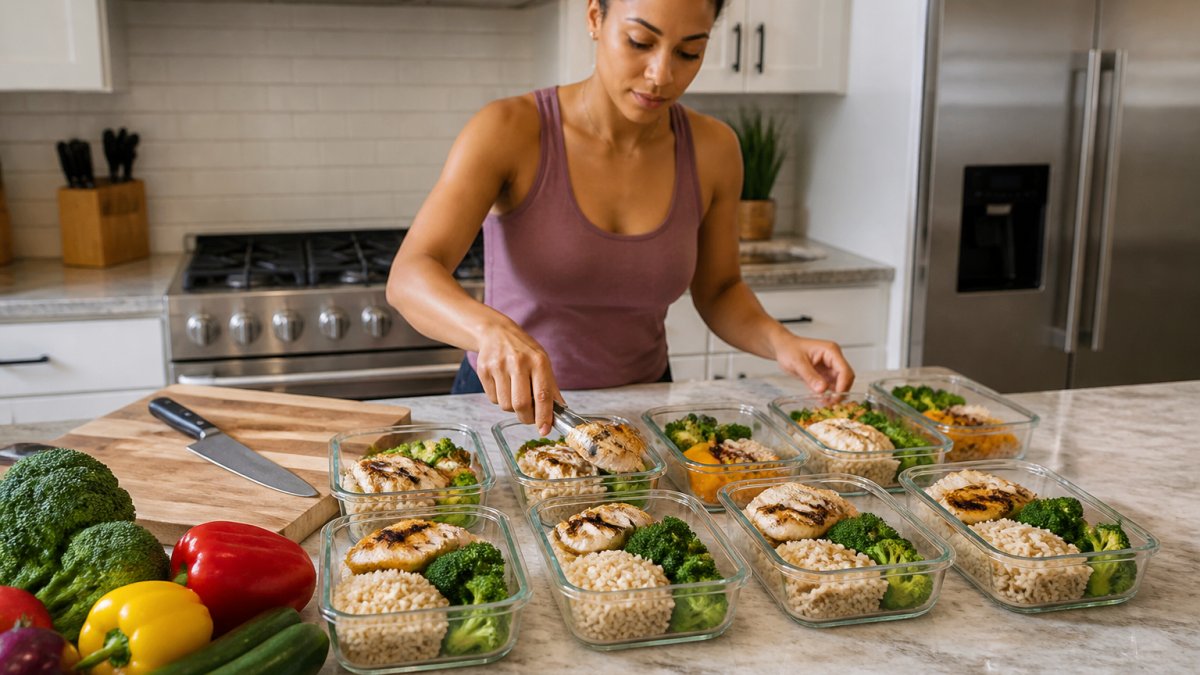
A practical weekly rhythm:
- Sunday: cook two proteins, one grain, and roast a tray of vegetables
- Monday to Wednesday: eat from containers, keep fruit and nuts on hand
- Thursday: quick restock of one protein and fresh produce
Build the Plan Around a Real Grocery List
Most meal-prep advice stops at "cook in bulk," but the grocery run determines whether you stick with it. A repeatable weight-loss grocery list is short, cheap, and built from items that keep:
- Proteins: eggs, chicken thighs or breasts, canned tuna, plain Greek yogurt, cottage cheese, dried or canned beans, tofu
- Grains and starches: oats, brown rice, whole-wheat pasta, potatoes, tortillas
- Produce: frozen mixed vegetables, frozen berries, bagged spinach, carrots, onions, cabbage, apples, bananas
That list covers most of the sample meals here and costs far less than specialty diet products. Frozen vegetables and berries are frozen at peak ripeness, so they hold nutrition well and rarely spoil.
Cost-Saving Substitutions That Do Not Weaken the Plan
Personalization does not require premium ingredients. A few swaps that preserve the protein-fiber-produce structure:
| Instead of | Try | Why It Works |
|---|---|---|
| Fresh salmon | Canned salmon or tuna | Same protein and omega-3s, lower cost, shelf-stable |
| Fresh berries | Frozen berries | Cheaper year-round, no spoilage |
| Pre-cut vegetables | Whole carrots, onions, cabbage | Lower price per pound, longer fridge life |
| Protein powder | Eggs, Greek yogurt, cottage cheese | Whole-food protein at a lower cost per serving |
| Specialty "diet" meals | Batch-cooked staples | You control portions and sodium |
People who plan around affordable staples keep going through tight months; plans built on specialty items collapse when the budget tightens. Sustainable weight loss comes from habits you can afford, in money and in time.
Batch Cooking and Food-Waste Strategy
Cook once, eat across the week without repeating the same plate every day:
- Roast two sheet pans of vegetables on Sunday. Use half in bowls, half in wraps or omelets later in the week.
- Cook a large pot of grains. Portion into containers so you can grab a serving without measuring each time.
- Brown a batch of ground turkey or lean beef. Season half with taco spices and half with Italian herbs so the same protein becomes two different meals.
Food-waste habits that also save money:
- Plan meals around what is already in the fridge before you shop.
- Store herbs and greens with a paper towel to absorb moisture and extend life.
- Turn wilting vegetables into soups, stir-fries, or frittatas instead of tossing them.
Choosing a Meal Planning App for Weight Loss
A meal planning app for weight loss helps most when it reduces friction, not when it adds another dashboard. The best app is the one you will open daily.
App quality depends on your behavior, not the feature list. If you hate logging every bite, choose meal templates over granular tracking. If you cook for a family, prioritize recipe scaling.
Match the App to How You Actually Eat
| If your pattern is... | Prioritize | Avoid |
|---|---|---|
| You cook most meals at home | Recipe storage, grocery list sync, serving scaling | Apps built only around restaurant logging |
| You eat out or order in often | A large restaurant and packaged-food database | Apps with a thin food library |
| You dislike logging every bite | Meal templates, photo-based logging, weekly check-ins | Apps that require per-gram entry |
| You cook for a household | Recipe scaling, shared plans, multiple profiles | Single-user apps with no scaling |
| You want coaching, not just tracking | Apps with a human coach or dietitian option | Fully automated apps with no support |
A practical test: enter one real day of your normal eating into a candidate app. If that takes more than a few minutes or the database cannot find the foods you actually eat, the app will not survive a busy week.
Safety, Medical Conditions, and When to Consult a Clinician
An app is a tool, not a clinician. It can estimate calories and track habits, but it cannot interpret your medications, lab results, or medical history. Before following any app-generated calorie target, talk with a clinician if any of the following apply:
- You have a chronic condition such as diabetes, heart disease, kidney disease, or thyroid disease. Calorie and macronutrient targets often need clinical adjustment.
- You take medications that affect appetite, blood sugar, blood pressure, or weight. Some drugs change how your body handles food and fluid.
- You are pregnant or breastfeeding. Energy and nutrient needs are different, and weight-loss targets are usually not appropriate without medical guidance.
This article offers general information, not individualized medical advice. A registered dietitian or your physician can translate your specific situation into a plan an app cannot.
Privacy and Data Considerations
Meal and weight-tracking apps collect sensitive health data. Before committing, check what the app stores, whether it shares data with third parties, and whether you can export or delete your information. A tool that fits your eating pattern but mishandles your data is not a good long-term choice.
Personalized Nutrition Coaching: What It Adds and When to Seek It
Personalized nutrition coaching adds accountability, adjustment, and interpretation an app cannot provide. A coach reviews your tracking, adjusts your plan when weight loss stalls, and troubleshoots adherence problems.
Many people manage fine with a self-built plan and an app; others benefit from structure and a person checking in.
At Year 20Fit, every training plan includes personalized meal planning, weight control training, and body composition coaching, so nutrition and training move together instead of competing.
Tracking Progress, Budgeting, and Adapting After Weight Loss
Track weight, measurements, and energy weekly, not daily, sodium, hydration, and hormones cause misleading fluctuations. Look at the two-to-three week trend.
Budgeting and long-term results connect more than people expect. A plan built on affordable staples survives a tight month; one built on specialty items does not.
Maintenance deserves its own plan. After reaching your goal, calorie needs are lower than when you started.
| Challenge | Fix | Why It Works |
|---|---|---|
| Weight loss stalls | Recalculate calories, adjust portions | Needs drop as weight drops |
| Plan feels boring | Rotate 3-4 favorite meals | Variety supports adherence |
| Budget tightens | Use frozen produce, eggs, beans | Affordable meals stay repeatable |
| Schedule changes | Build backup meals | Removes daily decisions |
Frequently Asked Questions
How do I create a personalized meal plan for weight loss?
Start with your daily calorie goal based on your current weight and activity level, then build each meal around a protein source, vegetables or fruit, a high-fiber carbohydrate like whole grains, and a small amount of healthy fat. Factor in your food preferences, dietary needs, and schedule so the plan is realistic. Adjust portions every two to three weeks based on your weight tracking, and consider working with a registered dietitian or personalized nutrition coaching for medical conditions.
What should a weight-loss meal plan include?
A balanced plan includes protein at every meal, plenty of vegetables and fruit, whole grains and other fiber-rich foods, and moderate portions of healthy fats. It should also fit your calorie goals and daily routine. Structured meal planning helps you control portion size and avoid impulsive choices. Most adults do well with three meals plus one or two planned snacks, but meal frequency can vary based on your schedule and preferences.
How often should I adjust my meal plan for weight loss?
Review your plan every two to four weeks. If your weight has not changed for two to three weeks and you are tracking accurately, reduce portions slightly or increase activity. As you lose weight, your body needs fewer calories, a process called metabolic adaptation, so periodic adjustments are normal. Use weight tracking and how your clothes fit to guide changes rather than daily scale fluctuations.
Can a meal planning app for weight loss replace a dietitian?
A meal planning app for weight loss can help you track calorie intake, log meals, and generate recipe ideas, which supports adherence. It cannot diagnose conditions or tailor a plan around medications, food allergies, or medical needs. If you have diabetes, kidney disease, a history of an eating disorder, or take prescription medication, consult a clinician or registered dietitian before making major changes. Apps work best as a tool alongside professional guidance.
How do I meal prep for a weight-loss plan without getting bored?
Prep base ingredients rather than full identical meals. Cook a batch of protein, a grain, and roasted vegetables, then mix different sauces and seasonings through the week. Rotate two or three breakfast options and keep frozen vegetables and pre-cooked proteins on hand for busy days. This keeps meals varied and makes it easier to stick with your calorie goals. Budget-conscious shoppers can plan meals around sales and seasonal produce.
How can I tell whether my personalized meal plan is working?
Track your weight weekly under similar conditions, such as the same morning routine, and look at the trend over three to four weeks rather than day-to-day changes. Also note energy levels, hunger, sleep, and how your clothes fit. Sustainable weight loss typically ranges from about 0.5 to 2 pounds per week, though individual response varies. If nothing changes after a month of consistent adherence, revisit your calorie intake, portion sizes, or activity level.
Weight loss stalls for almost everyone at some point, and the fix is rarely a stricter diet. It is a plan built around your actual life, adjusted as your body changes. Year 20Fit offers no-contract, month-to-month memberships with 24-hour access for Gold and training members, founder-coached small group and 1-on-1 training, and personalized meal planning included in every training plan. Book a free consultation and we will help you build a routine you can actually keep.