 how-to
How to Stay Consistent With Fitness: A Practical Guide
Table of Contents
- Why Consistency Matters More Than Intensity
- Set Clear, Realistic Fitness Goals You Can Actually Achieve
- Create a Workout Schedule for Busy People
- How Many Days a Week Should I Work Out
- Build Your Fitness Routine Into Daily Life
- How to Get Back Into Exercise After a Break
- Track Progress With a Fitness Habit Tracker
- Conclusion
- Frequently Asked Questions
Last Updated: October 16, 2026
Why Consistency Matters More Than Intensity
The biggest mistake people make when trying to stay consistent with fitness is thinking intensity beats everything else. They chase the hardest workout and the fastest results, then quit after three weeks because they can't sustain it. (Source: a 2026 study on habit formation)
Consistency wins. A moderate workout you do three times a week for six months beats an intense program you abandon after month one. This is the core truth behind how to stay consistent with fitness.
Your body adapts to regular movement, your mind builds the habit, and your schedule stops fighting you. Intensity matters, but only if you show up, and showing up requires a plan that fits your life, not one that demands your life fit around it.
The ones who succeed aren't the most dedicated or athletic, they design their fitness journey around what they'll actually do, not what they think they should do.
Set Clear, Realistic Fitness Goals You Can Actually Achieve
A goal like "get fit" fails because it's invisible. You can't track it. You can't know when you've reached it. A clear goal is specific and measurable.
Instead of "get fit," try "walk 30 minutes five days a week" or "do three strength training sessions per week." These are goals you can check off.
Make your goals realistic too. If you haven't worked out in two years, start with two or three days a week, not six. Once that becomes automatic, add more.
Common mistake: Setting a goal so ambitious that missing one workout makes you feel like you've failed. Then you skip the next one. Then you quit.
Better approach: Set a goal that feels slightly challenging but doable. Something like "three 30-minute workouts per week" or "walk 20 minutes on weekday mornings." When you hit it consistently, raise the bar.
Create a Workout Schedule for Busy People
Your workout schedule needs to fit your actual life, not an imaginary version where you have unlimited time. Look at your week honestly: when do you have 30 to 60 minutes free? Pick times that already exist in your schedule, not times you hope to create.
If you work early mornings, a 6 a.m. workout might work. If you're a night-shift worker, a 24-hour gym with flexible access, like Year 20Fit offers, lets you train whenever you're awake and alert. The specific time matters less than one you'll actually keep.
Your workout schedule for busy people doesn't need to be complicated:
- Pick 2-4 days per week for exercise
- Choose the same days each week (Monday, Wednesday, Friday, for example)
- Pick the same time on those days
- Block that time on your calendar like it's a meeting you can't miss
Consistency comes from repetition: the same time, the same days, every week. Your body and mind start to expect it, and you stop having to decide whether to work out.
How Many Days a Week Should I Work Out
Most people land on three to five days per week for a sustainable routine. Three days is enough to see progress; five works if you enjoy training and can recover.
Frequency matters for two reasons.
Starting points by experience level:
- Beginner (0-6 months of consistent training): 2-3 days per week, 30-45 minutes per session
- Intermediate (6-24 months): 3-4 days per week, 45-60 minutes per session
- Advanced (2+ years of consistent training): 4-5 days per week, 60+ minutes per session
Those ranges assume a general fitness goal. For strength, three well-programmed full-body sessions beat five random ones. For endurance, more frequent shorter sessions work better than fewer long ones.
Match the number to your actual schedule, not your ideal one.
- Shift workers: Two to three sessions on your off days, plus short 10-15 minute movement blocks on work days, tends to hold up better than trying to train before or after a rotating shift.
- Parents with young kids: Three 30-minute sessions, ideally at a time when childcare is covered or your partner is home, beats five sessions you have to negotiate for every day.
- People with unpredictable work hours: Two fixed sessions plus one flexible "floating" session you place wherever the week allows. The fixed ones anchor the habit; the floating one absorbs chaos.
- People with limited equipment or no gym access: Bodyweight or minimal-equipment sessions can be done more frequently because recovery demand is lower, so four to five short sessions per week is often realistic.
How to progress the number of days. Add a day only after your current number has felt easy for three to four consecutive weeks.
The real answer to how many days a week you should work out is: the highest number you can hit consistently for the next three months without dreading it.
Build Your Fitness Routine Into Daily Life
The difference between a workout you do once and a routine you maintain is integration, weaving exercise into daily life so it becomes automatic, not optional.
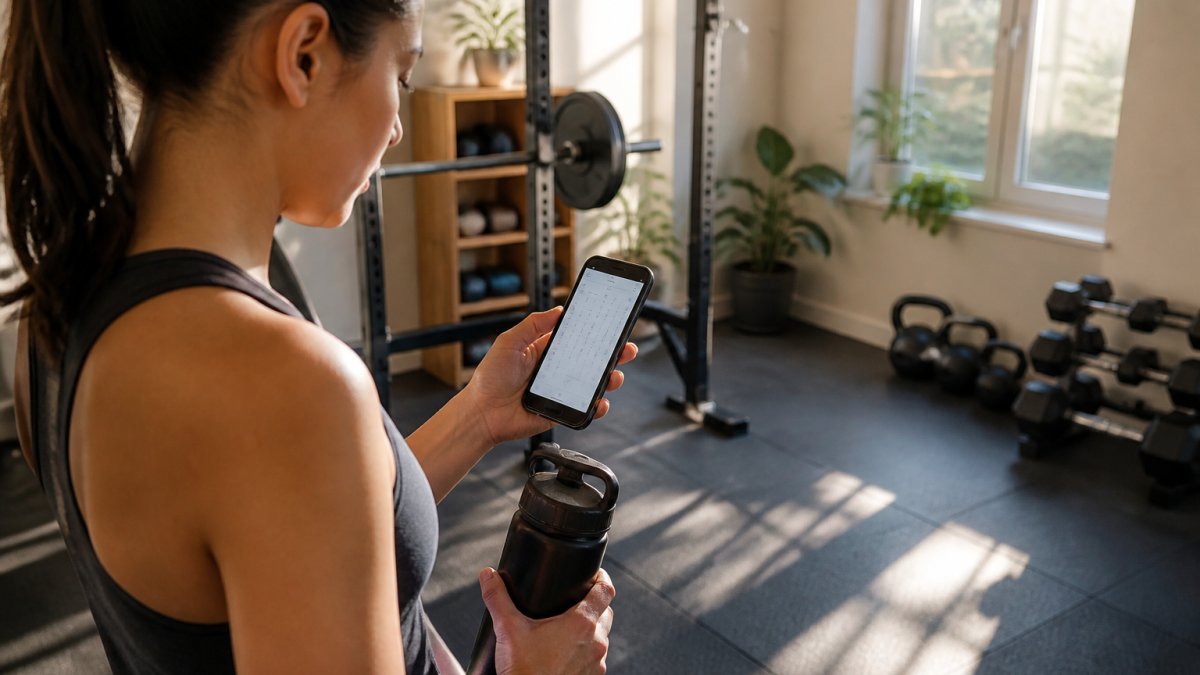
Schedule workouts like appointments. Put them on your calendar, set a phone reminder, and treat them like a meeting with your boss. When it's on the calendar, you're less likely to skip it.
Prepare the night before. Lay out your workout clothes. Pack your gym bag. Eat something light if you're training in the morning. Remove friction.
Link your workout to an existing habit. If you always have coffee at 6 a.m., work out after coffee. If you always get home at 5:30 p.m., that's your workout time.
Tell someone about your plans. A workout partner, a friend, or even a family member. Accountability works. When someone knows you're supposed to train, you're more likely to show up.
Skipping one workout is fine. Skipping two in a row is the start of a pattern. When you miss a session, get back to it the very next scheduled day. Don't wait a week.
How to Get Back Into Exercise After a Break
Most people don't fail at fitness from lack of discipline. They fail because life happens, illness, work stress, travel, family obligations.
Many people jump back in at the level they left. They miss two weeks, attempt their old routine, get sore and discouraged, and quit again.
Here's the restart plan:
When you've been away for one to two weeks, start at 50-60% of your previous intensity. If you were doing three 45-minute workouts, do three 25-minute workouts.
When you've been away for more than a month, start even lower. Two 20-minute sessions per week. Your goal is to rebuild the habit, not prove you're still strong.
Increase gradually. Add 5 minutes per week or one extra session every two weeks. Give your body time to readapt.
The mental side matters more than the physical side. You didn't lose all your progress, fitness comes back faster than it went away.
Track Progress With a Fitness Habit Tracker
Most people track the wrong thing. They weigh themselves daily, watch the scale stall, and conclude the routine isn't working, even when attendance, strength, and energy are improving.
A better approach is to track a small set of indicators that move at different speeds. Together they give you an honest picture of progress even when any single metric looks flat.
Five indicators worth tracking:
- Attendance rate. The percentage of planned sessions you actually completed. This is the single most important number for consistency. Aim for 80%, if you plan four sessions and complete three, that's a win, not a failure. Track it weekly and monthly so you can see the trend, not just the last seven days.
- Strength or capacity. Pick two or three benchmark movements, a squat variation, a push-up variation, a plank hold, a walking pace, and note what you can do once a month. Progress here is slow but reliable, and it's the clearest evidence that your training is doing something.
- Energy and mood. A simple 1-5 rating before and after each session. Patterns emerge fast: you may find that morning sessions leave you sharper all day, or that long sessions tank your afternoon. That's actionable information.
- Mobility and function. Can you get off the floor without using your hands? Touch your toes? Carry groceries up stairs without stopping? These everyday markers often improve before the scale moves, and they're the reason most people started in the first place.
- Recovery quality. Sleep duration, resting soreness, and how ready you feel to train the next day. If recovery is trending down while attendance is trending up, you're borrowing from next month's consistency.
How to actually log it. The tool matters less than the friction. A wall calendar with an X for each completed session is enough for attendance.
Review weekly, not daily. Daily tracking creates noise and anxiety. Once a week, ask three questions: Did I hit my attendance target? Is any indicator trending up?
What to do with the data. If attendance is high but strength is flat, add progressive overload, more weight, reps, or difficulty.
A note on streaks. Streaks are motivating until they break, and then they become a reason to quit. If you use a streak tracker, build in a rule for missed days, for example, one missed day per week doesn't break the streak. That keeps the tool working for you instead of against you.
Conclusion
Staying consistent with fitness isn't about willpower or genetics. It's about design: a clear goal, a schedule that fits your life, accountability built into your routine, and recovery when life interrupts.
Year 20Fit was built for exactly this challenge. Our flexible, no-contract memberships mean you can work around your schedule, whether you're a night-shift worker, an early riser, or someone with unpredictable hours. Our founder-coached small group and one-on-one training sessions keep you accountable and show you exactly what to do. And our personalized meal planning ensures your nutrition supports your fitness goals, not works against them.
The fitness routine that works is the one you'll actually do. Book a free consultation with our team and let's build a plan that fits your life.
Frequently Asked Questions
How can I stay consistent with fitness when I have a busy schedule?
Schedule workouts as non-negotiable appointments on your calendar, just like work meetings. Choose shorter sessions (20-30 minutes) that fit your day rather than waiting for a perfect hour-long block. Early morning, lunch breaks, or evening slots work depending on your schedule. The key is fitting exercise into your existing routine, not rearranging your life around it. Start with just 2-3 days per week if that's realistic for you.
How do I get back on track after missing workouts?
Missing workouts happens to everyone, shift workers, busy professionals, and beginners all face interruptions. The restart plan is simple: return to your next scheduled session without guilt or punishment workouts. Start at 50-60% of your previous intensity for the first week back, then gradually increase. Track your return as a win, not a failure. Most people find accountability from a coach or fitness partner helps prevent the next gap.
Is working out 4 days a week enough to see results?
Yes, 4 days per week is enough to build strength, improve body composition, and boost energy levels. Consistency over time matters far more than frequency. Three days of focused training beats five days of sporadic effort. The best frequency is one you can actually stick to week after week. Combine training days with daily movement like walking or stretching on off days for additional benefits.
How do I track my fitness progress beyond weight and appearance?
A fitness habit tracker records what actually matters: workout frequency, exercises completed, weights lifted, and how you felt during sessions. Track energy levels, sleep quality, and stress reduction, these are real outcomes of consistency. Monitor strength gains, how your clothes fit, and performance improvements like running faster or lifting heavier. These metrics often change before the scale does, keeping you motivated through plateaus.
Ready to stay consistent with fitness? At Year 20Fit, we help people build sustainable exercise plans through 24-hour gym access, expert coaching, and personalized meal planning. No contracts. No judgment. Just real support for your fitness journey. Book your free consultation today.