 how-to
Ready to Get Started With Fitness Coaching in 2026?
Last Updated: October 28, 2026
Quick Summary
To get started with fitness coaching, book a free consultation at Year 20Fit to discuss your goals, then confirm cost and contract terms in writing. Your first week includes a health screening, a baseline fitness assessment, and a personalized workout plan reviewed with your coach.
- Ask which certifying body issued your coach's credential and when it expires.
- One-on-one training typically costs $200-$800+ per month.
- Beginners nervous about form should try one-on-one for the first 8-12 weeks.
- Year 20Fit memberships are month-to-month with no contracts.
- Red flags include no health screening before your first session.
Table of Contents
- What Getting Started With Fitness Coaching Actually Looks Like
- How to Choose a Personal Trainer Who Fits Your Life
- Personal Training for Beginners: What to Expect in Your First Sessions
- Fitness Coach Consultation Questions to Ask Before You Sign Up
- Personal Training Session Frequency: How Often Is Enough?
- Choosing a Coaching Format by Budget, Schedule, and Support Needs
- Adapting Coaching for Injuries, Chronic Conditions, and Older Beginners
- Measuring Progress Beyond the Scale
- Book Your Free Consultation
- Frequently Asked Questions
What Getting Started With Fitness Coaching Actually Looks Like
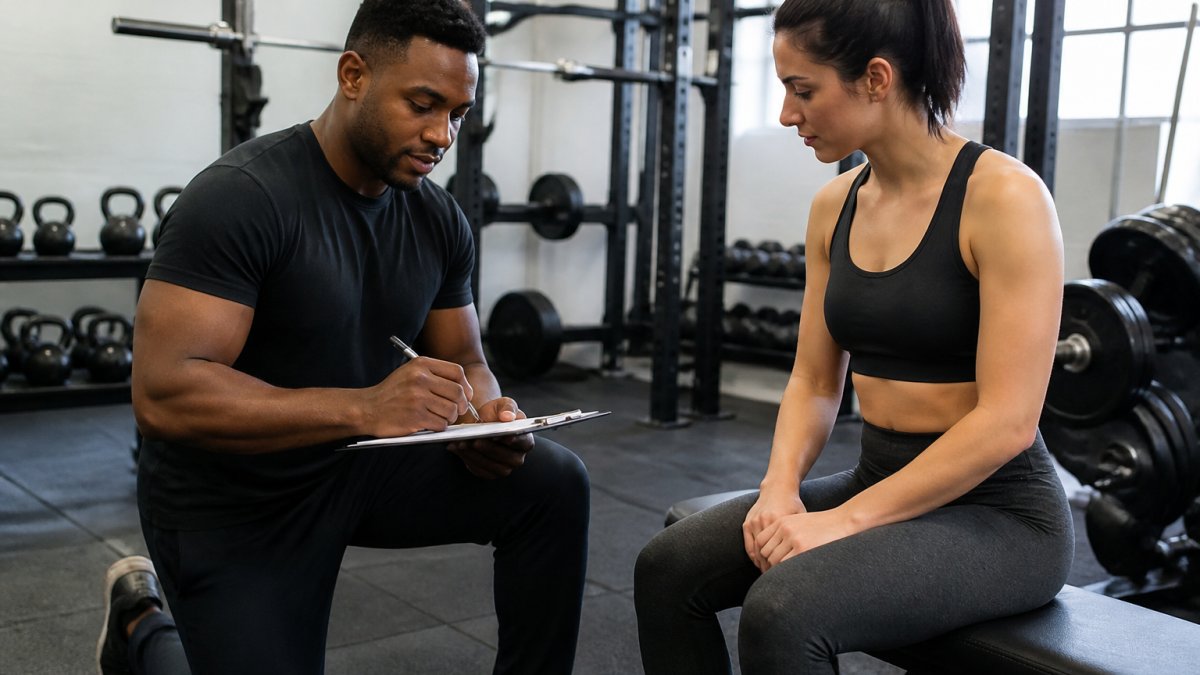
At Year 20Fit, you can book a free consultation to discuss your fitness goals.
Your First Week, Step by Step
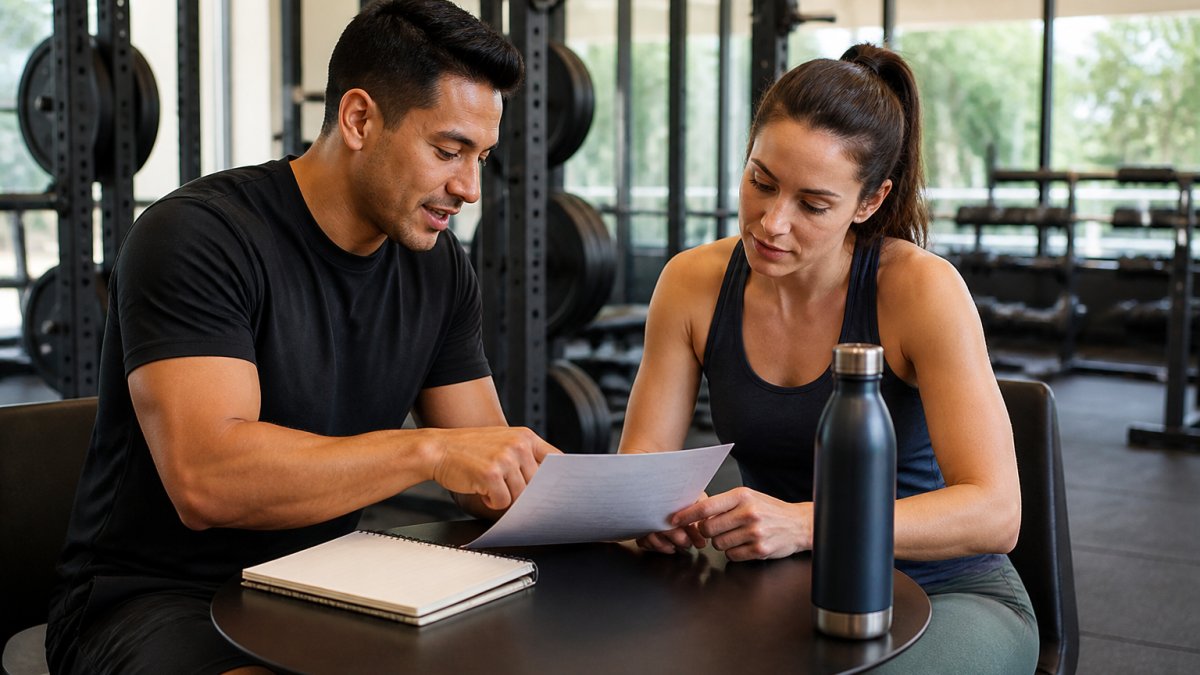
- Book a consultation and confirm the cost and contract terms in writing
- Complete a health screening and exercise history form
- Take a baseline fitness assessment
- Review your personalized workout plan with your coach
- Schedule your first three sessions on the calendar
- Set up workout logging, in an app or on paper
- Agree on how often you'll check in
How to Choose a Personal Trainer Who Fits Your Life
When choosing a personal trainer, consider whether the schedule matches yours and whether you can talk to the trainer honestly.
American Council on Exercise certification guide explains the main accredited credentials and what each one covers. Ask which certification your coach holds and whether it's current.
The Credentials That Actually Mean Something
"Certified personal trainer" is not a protected title. What you want is a certification from a program accredited by a recognized body such as the National Commission for Certifying Agencies (NCCA). The credentials you will see most often are:
- NASM-CPT (National Academy of Sports Medicine), heavy on movement assessment and corrective exercise, useful for beginners with nagging aches.
- ACE-CPT (American Council on Exercise), broad, behavior-change focused, strong on coaching communication.
- ACSM-CPT (American College of Sports Medicine), exercise-science heavy, common among coaches who work with clinical or older populations.
- NSCA-CPT (National Strength and Conditioning Association), strength-focused, common in performance settings.
Ask: Which certifying body issued your credential, and when does it expire?
Safety Practices to Verify Before Your First Rep
- Health screening: A written PAR-Q+ (Physical Activity Readiness Questionnaire) or equivalent intake, plus a follow-up conversation about injuries, medications, and prior surgeries.
- Physician clearance protocol: A clear rule for when they require a doctor's sign-off, typically chest pain, uncontrolled blood pressure, recent surgery, or pregnancy.
- Movement screen: A basic screen (overhead squat, hinge, push, pull, carry) before any loaded work, with documented modifications.
- Emergency plan: Where the AED is, who is CPR/AED certified on staff, and what the incident-report process looks like.
- Sanitation and equipment checks: Cables inspected, collars on bars, plates racked. Small signals, but they tell you how the gym is run.
Client Feedback That Tells You Something
If gym culture is your biggest worry, read about finding a supportive gym community in Beltsville before you commit.
Personal Training for Beginners: What to Expect in Your First Sessions
At Year 20Fit, every training plan includes personalized meal planning. If weight loss is the goal, our guide to personalized meal planning for weight loss covers how that side of the program works.
Fitness Coach Consultation Questions to Ask Before You Sign Up
Bring these questions to your consultation. The answers tell you more than any brochure.
- What certification do you hold, and how do you keep it current?
- How do you assess a beginner's starting point?
- How do you adapt a custom training plan for injuries or limitations?
- What does a typical month cost, and what does that include?
- How do you track progress, and how often do we review it?
- What happens if I need to cancel or pause?
- How do you communicate between sessions?
Write the answers down. If a coach dodges the pricing or contract questions, that's your answer.
Personal Training Session Frequency: How Often Is Enough?
That's where accountability earns its keep. Regular check-ins catch the slide before it becomes a dropout.
Choosing a Coaching Format by Budget, Schedule, and Support Needs
Consider your budget, realistic weekly schedule, support needs, and any accessibility or health constraints when choosing a coaching format.
| Format | Best For | Support Level | Schedule Fit | Typical Monthly Cost Range |
|---|---|---|---|---|
| One-on-one training | Beginners who want close attention and form correction | Highest | Booked sessions, 2-3x/week | $200-$800+ |
| Small group training | Beginners who want coaching plus community at a lower per-session cost | High | Fixed class times, 2-4x/week | $100-$300 |
| Online coaching | People with unpredictable schedules or no local gym | Medium | Flexible, app-based programming | $50-$300 |
| Self-guided with check-ins | Budget-conscious, self-motivated lifters | Lower | Fully flexible | $25-$150 |
A Four-Question Decision Framework
Consider these questions when choosing a format.
- Accessibility and health: Do you need adaptive equipment, a quiet space, low-impact progressions, or a coach experienced with your condition? If so, filter for that first, format second.
Matching Format to Real-Life Constraints
- Shift work or travel: Online coaching with a programmed week and a check-in call. In-person sessions get cancelled first when schedules shift.
- New to the gym and nervous about form: One-on-one for the first 8-12 weeks to learn the five basic patterns, then step down to small group or self-guided.
- Budget-tight but motivated: Self-guided with a monthly check-in. You get programming and accountability without paying for live coaching hours.
- Older beginner or returning from injury: One-on-one or small group with a coach who holds a special-populations credential, plus a written modification plan.
- Wants community: Small group training. The social pull is the adherence mechanism.
If small group training is on your shortlist, our small group training guide for fitness beginners breaks down how sessions are structured.
Questions to Ask Every Provider, Regardless of Format
- What is the total monthly cost, itemized, including any onboarding or assessment fee?
- What is the contract length, and what are the cancellation and pause terms in writing?
- How many live coach contact hours do I get per month, and how fast do you reply between sessions?
- What happens if I miss a session or need to reschedule?
- How do you handle injuries, travel, or a week when I can't train?
- Is nutrition or body-composition coaching included, or is it an add-on?
Write the answers down. A provider who dodges the pricing or contract questions has answered them.
Adapting Coaching for Injuries, Chronic Conditions, and Older Beginners
Physical activity guidelines for Americans outlines recommended weekly activity levels, including aerobic activity and strength training, for adults at every age.
Measuring Progress Beyond the Scale
Year 20Fit offers body composition coaching.
Staying consistent is the real driver behind all of it. Our guide on how to stay consistent with fitness covers the habits that keep a routine alive when motivation dips.
Book Your Free Consultation
We're family-owned, our memberships are month-to-month with no contracts, and Gold and training members get 24-hour gym access. Every training plan includes personalized meal planning, weight control training, and body composition coaching. Our founder coaches small group and one-on-one training sessions.
Book a free consultation.
Get started with Year 20Fit.
Frequently Asked Questions
How do I get started with fitness coaching?
Start with a free consultation to discuss your fitness goals.
What should I ask before hiring a personal trainer?
Ask what credentials the trainer holds and what happens if you need to pause. If a trainer dodges these questions, that is your answer.
How often should I meet with a fitness coach?
Two sessions per week suits most beginners because it leaves recovery days and keeps the habit fresh. One session a week works if you train independently the rest of the time and use check-ins for accountability. Three or more sessions fit people with a specific performance goal or who want closer supervision. Your personal training session frequency should match your budget and schedule, not an upsell. A coach who pushes the maximum package on day one is telling you something.
Can a fitness coach help with weight loss and meal planning?
Year 20Fit includes personalized meal planning, weight control training, and body composition coaching in every training plan.