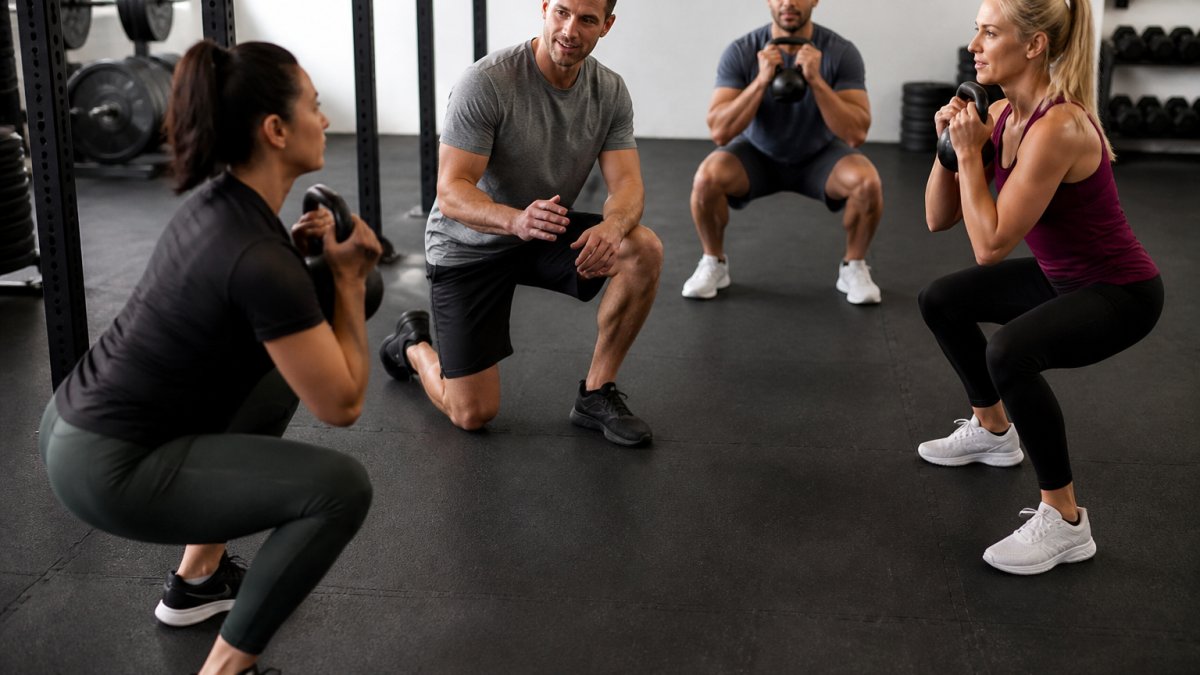
 listicle
Is Affordable Small Group Personal Training Worth It?
Last Updated: November 2, 2026
Quick Summary
Affordable small group personal training gives you a coach-led workout with three to six people per trainer, so you pay a fraction of one-on-one rates while still getting form corrections and a plan built around your goals. Always ask for the three-month total, not the session rate, to see what's really included.
- Group size is the single biggest lever on price, so compare rates at three, four, and six clients.
- A 45-minute session is not automatically cheaper than a 60-minute one; ask for the per-minute rate.
- A fair rate should include an initial assessment, a written plan, form coaching, and progress tracking.
- Ask for the total cost of your first three months, itemized, before comparing two studios.
- Year 20Fit offers no-contract, month-to-month memberships with founder-coached small group sessions.
Table of Contents
- What Affordable Small Group Personal Training Actually Gets You
- Small Group Personal Training Cost: What Drives the Price
- Small Group Personal Training vs Personal Training: A Side-by-Side Look
- Small Group Training for Beginners: Why a Shared Session Works
- What Should Be Included in the Price
- How to Choose the Right Group Size and Coach
- Questions to Ask Before You Sign Up
- Book a Free Consultation at Year 20Fit
- Frequently Asked Questions
What Affordable Small Group Personal Training Actually Gets You
Affordable small group personal training gives you a coach-led workout with three to six people per trainer, so you pay a fraction of one-on-one rates while still getting form corrections and a plan built around your goals. At Year 20Fit, our small group and 1-on-1 sessions are founder-coached. The catch most gyms won't tell you: "affordable" means nothing without knowing what's inside the session. Below, we break down the real cost drivers, the group sizes that work, and the questions that separate a genuine deal from a cheap hour of supervised confusion.
Small Group Personal Training Cost: What Drives the Price
Most pages tell you small group training is "cheaper than one-on-one" and stop there. That's not a price, it's a slogan. Here's the actual math, so you can compare any studio's offer on equal footing.
The per-person formula
A coach's hour has a fixed cost to the studio. Divide that hour by the number of clients and you get the per-person rate. That's why group size is the single biggest lever on price:
- Three clients per coach: more direct attention per person. Typically the highest per-person cost of any group format.
- Four clients: a common small group size that balances attention and price.
- Six clients: typically a lower per-person cost, but the coach manages a larger room.
Ask any studio for its rate at three, four, and six clients so you can compare the per-person cost directly.
The four real cost drivers
- Group size. Covered above. Smaller group, higher per-person price, more hands-on correction.
- Session length. A 45-minute session is not automatically 25% cheaper than a 60-minute one, studios often price by the slot, not the minute. Ask for the per-minute rate if you train short sessions.
- Coach credentials. A certified strength coach with continuing education costs the studio more than a floor trainer, and that shows up in the rate. This is usually money well spent; see the coach-quality checklist below.
- What's bundled. Assessments, program design, nutrition guidance, and progress tracking can be included or billed separately. A low session rate with three add-ons is often more expensive than a higher rate that includes them.
Worked total-cost examples
To compare offers, build your own worked example using the studio's written rates. Include the assessment fee, any add-ons, and whether packages or drop-ins cost less at your training frequency.
Package structure and contracts
Before you sign any package or membership, confirm whether unused sessions expire, whether the rate is locked for the term, and what the cancellation terms are.
Consumer guidance on evaluating fitness memberships and contracts
When you compare starting prices, do it at your actual training frequency and with every add-on included. That's the only number that tells you whether a program is genuinely affordable for you.
Small Group Personal Training vs Personal Training: A Side-by-Side Look
Small group personal training trades some privacy for shared energy and a lower price. Private training gives you the coach's full attention and faster program changes. Group sessions give you accountability from people chasing similar goals, and many beginners stick with them longer because the room expects them to show up.
| Factor | Small Group Training | Private Training |
|---|---|---|
| Clients per coach | Three to six | One |
| Per-person cost | Lower | Highest |
| Attention per session | Shared but structured | Undivided |
| Accountability | Group-driven | Coach-driven |
| Best for | Beginners, budget-conscious lifters | Specific rehab or sport goals |
Neither format is "better." The right pick depends on how much hands-on correction you need and how you stay consistent.
Small Group Training for Beginners: Why a Shared Session Works
Beginners often quit because a solo gym floor feels like a test they're failing. A shared session removes that. When everyone in the room is learning, the pressure drops and the coaching lands.
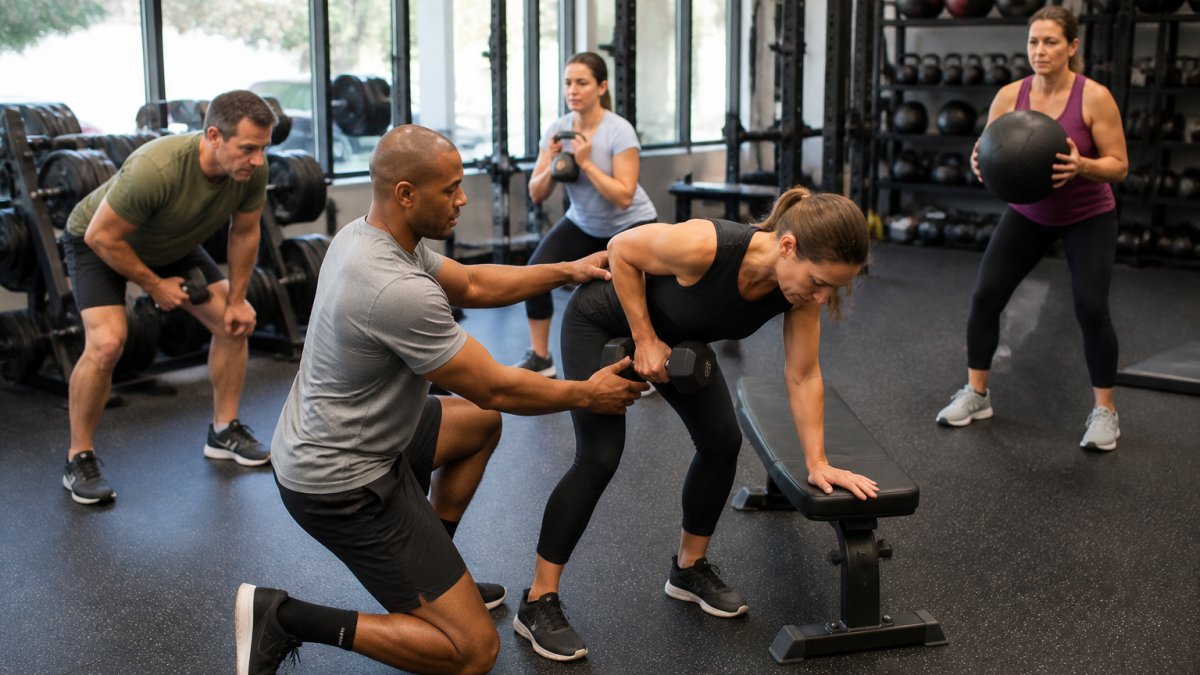
A common mistake is joining a group where levels are wildly mixed with no scaling. Good coaching fixes this by giving each person a version of the same movement. If you want a deeper walkthrough on starting out, read our guide to small group training for fitness beginners.
What Should Be Included in the Price
This is where most affordable training offers fall apart. Two studios can advertise the same session rate and deliver wildly different value, because one bundles the support that makes training work and the other sells it back to you piece by piece. Use this checklist to separate the two.
The core inclusions
A fair small group rate should cover, at minimum:
- An initial assessment. Movement screen, baseline strength or conditioning test, and a conversation about goals and injuries. If this is billed separately, factor it into your first-month cost.
- A written, individualized plan. Not a whiteboard workout everyone copies, a program that reflects your starting point and gets updated as you progress.
- Form coaching inside every session. This is the whole reason to pay for a coach instead of following a video.
- Progress tracking. Some record of loads, measurements, or performance benchmarks, reviewed with you on a set cadence (monthly is typical).
- A schedule you can actually attend. A cheap rate for 6 a.m. slots you can't make is not a deal.
The common upsells
These are frequently excluded from a headline rate and sold later. None is inherently bad, you just need to know the price:
- Nutrition plans and meal planning
- Body composition scans beyond the initial assessment
- One-on-one check-ins or program reviews
- Access to the gym outside session times
- Equipment or wearable add-ons
What each inclusion is worth
You don't need exact dollar values to compare, you need to know which components you'd otherwise pay for. If you'd hire a separate nutritionist, an included meal plan has real value. If you already track your own lifts, a progress-tracking app is nice but not decisive. Weight the inclusions by what you'd actually use, not by how long the feature list is.
At Year 20Fit, every training plan includes personalized meal planning, weight control training, and body composition coaching.
How to spot a stripped-down rate
Watch for signs of a stripped-down rate, such as a separately priced assessment, a one-size-fits-all plan, or no progress review.
Ask for the total cost of your first three months, itemized. If consistency is your weak spot, our practical guide on how to stay consistent with fitness pairs well with any program you choose.
How to Choose the Right Group Size and Coach
Group size affects how much coaching you get. Smaller groups generally allow more individual attention.
Coach quality matters more than the headcount. Ask about credentials, how they scale movements for different levels, and whether they coach the same group each week. A supportive gym community can make a real difference in your experience. Learn how to find a supportive gym community in Beltsville.
Questions to Ask Before You Sign Up
Ask these before you commit:
- What is the exact per-session cost at my training frequency?
- How many people are in a typical session, and does that number stay fixed?
- Are assessments, meal planning, and progress tracking included or extra?
- Is there a contract, and what are the cancellation terms?
- Can I try a session before I buy a package?
If you want to evaluate fit before committing, book a free consultation to meet the coach and see the space first.
Book a Free Consultation at Year 20Fit
Finding affordable small group personal training comes down to transparency: know the group size, know what's included, and know the coach. Year 20Fit is a family-owned gym with flexible, no-contract, month-to-month memberships, 24-hour access for Gold and training members, and founder-coached small group and 1-on-1 sessions. If you're ready to see whether the fit is right, get started with fitness coaching and book a free consultation.
Frequently Asked Questions
How much does small group personal training cost?
Pricing varies by gym, group size, and session length, so ask for a written rate sheet before you commit. At Year 20Fit, training plans are priced by membership type and include meal planning and body composition coaching, so request a quote for current rates rather than assuming a per-session figure.
Is small group personal training cheaper than one-on-one training?
Yes, in almost every case. A coach's hourly rate is split across the group, so each client pays less per session. The trade-off is less exclusive attention: you share the coach with three to five other people. For beginners learning movement patterns and building consistency, that trade is usually worth it. For sport-specific or rehab work, one-on-one still makes more sense.
How many people are in a small group personal training session?
Most programs cap groups at three to five clients per coach, and some allow up to six. Group size is the single biggest factor in how much individual correction you get. Ask for the hard cap in writing. If a gym cannot state a number, assume the group can grow and your per-person attention can shrink.
Is small group personal training good for beginners?
It is often better than going it alone. A coach watches your form, scales each exercise to your level, and keeps you accountable between sessions. At Year 20Fit, founder-led sessions include personalized meal planning and body composition coaching.
What should I look for in a small group personal training program?
Check four things: the group size cap, the coach's credentials and experience, what the price includes beyond the session, and the contract terms. Look for client reviews that mention attention and progress, not just atmosphere. Ask whether a free consultation or trial session is available so you can judge the fit before paying.
The real test of any program is whether you'll still show up in month three. Year 20Fit builds for that with flexible scheduling, no cancellation fees, and coaching that tracks your progress instead of guessing at it. Get started with Year 20Fit and turn a first session into a routine you keep.